Research for Wikipedia
Understanding Gen Z's Information Needs and Educational Challenges
role
UX Researcher
timeline
12 weeks
team
4 UX Researchers + Product Manager

Research Approach
Foundation Research: Wikimedia Movement Strategy 2030
We began by conducting a thorough analysis of the Wikimedia Movement Strategy 2030, examining its goals and mission. Our primary focus centered on these core principles:

Market Trends Analysis
We analyzed Google market trends to understand information consumption patterns, examining:
• Residual patterns (declining behaviors)
• Dominant patterns (current mainstream behaviors)
• Emerging patterns (growing behaviors)
Key Finding: Gen Z emerged as the most dominant audience for Wikipedia, establishing them as our primary research focus. This insight shaped our decision to concentrate design efforts on increasing their engagement with the platform.

how did we include community in our research?
Diverse Participant Recruitment
In alignment with Wikimedia’s focus on inclusivity, we engaged learners from diverse backgrounds and education levels in our research. This approach ensured that our design was accessible and relevant to a broad range of users, reflecting the values of equity and diversity in decision-making.

participatory research methods
We actively involved the community in our research by conducting co-design workshops, usability tests, and interviews. These sessions allowed us to gain valuable insights into Gen Z's needs and preferences, ensuring that our design decisions were closely aligned with their expectations and behaviors.
concept testing
Test 1: Confirming + Learning Experiment
Purpose: Evaluate how balanced information and peer discussions shape participants' perspectives.
5 Steps:
Prior Knowledge - Capture initial thoughts on topic
Present Information - Show unbiased Wikipedia article
Assess Comprehension - Write 2-3 line recap
Measure Shift - Reflect on what was learned
Discussion - Facilitate group exchange and check final understanding
Goal: Determine if Wikipedia content + peer discussion helps Gen Z form informed viewpoints.

feature testing
Test 2: Learning Experiment
Purpose: Identify how different learning styles adapt to various topics and the most effective methods for learning new information.
Frameworks Used:
Bloom's Taxonomy - Hierarchical model of cognitive skills (Remember → Understand → Apply → Analyze → Evaluate → Create)
Kolb's Learning Cycle - Experiential learning model (Concrete Experience → Reflective Observation → Abstract Conceptualization → Active Experimentation)
4 Steps:
Topic Selection Interest - Choose topics of interest and motivation
Motivation and Relevance - Share why interested and topic relevance
Learning Map Creation - Imagine ideal learning about topic, outline approach
Learning Style Prioritization - Select and prioritize preferred learning methods
Goal: Understand Gen Z's learning preferences and optimize the information delivery experience.

co design workshops
Purpose: Collaborate with Gen Z to understand their Wikipedia and education perspectives through hands-on activities.


Key Research Findings
Critical Educational Gaps Identified
Our research revealed four significant challenges facing Gen Z learners:
1. Limited Exposure to Civic Topics: Many Gen Z participants demonstrated gaps in awareness of important civic and social issues, often due to algorithmic content filtering or lack of exposure in traditional educational settings.
2. Lack of Educational Autonomy: Participants expressed frustration with rigid educational structures that didn't allow them to explore topics at their own pace or follow their natural curiosity.
3. Difficulty Finding Their Voice: Gen Z learners struggled to develop and articulate their own perspectives on complex topics, often defaulting to repeating information without critical engagement.
4. Challenges Forming Well-Rounded Viewpoints: Participants had difficulty accessing and synthesizing multiple perspectives on controversial or complex topics, limiting their ability to form nuanced opinions.

how would wikipedia solve this?
Wikipedia's Unique Opportunity
Our research identified Wikipedia's breadth and depth of information as a unique asset for addressing these gaps. The platform's multifaceted content provides access to multiple perspectives, enabling users to explore topics comprehensively. This insight became the foundation for our design strategy: leveraging Wikipedia's existing strengths to help Gen Z develop well-rounded, educated points of view.

defining a point of view
Our research identified Wikipedia's breadth and depth of information as a unique asset for addressing these gaps. The platform's multifaceted content provides access to multiple perspectives, enabling users to explore topics comprehensively. This insight became the foundation for our design strategy: leveraging Wikipedia's existing strengths to help Gen Z develop well-rounded, educated points of view.
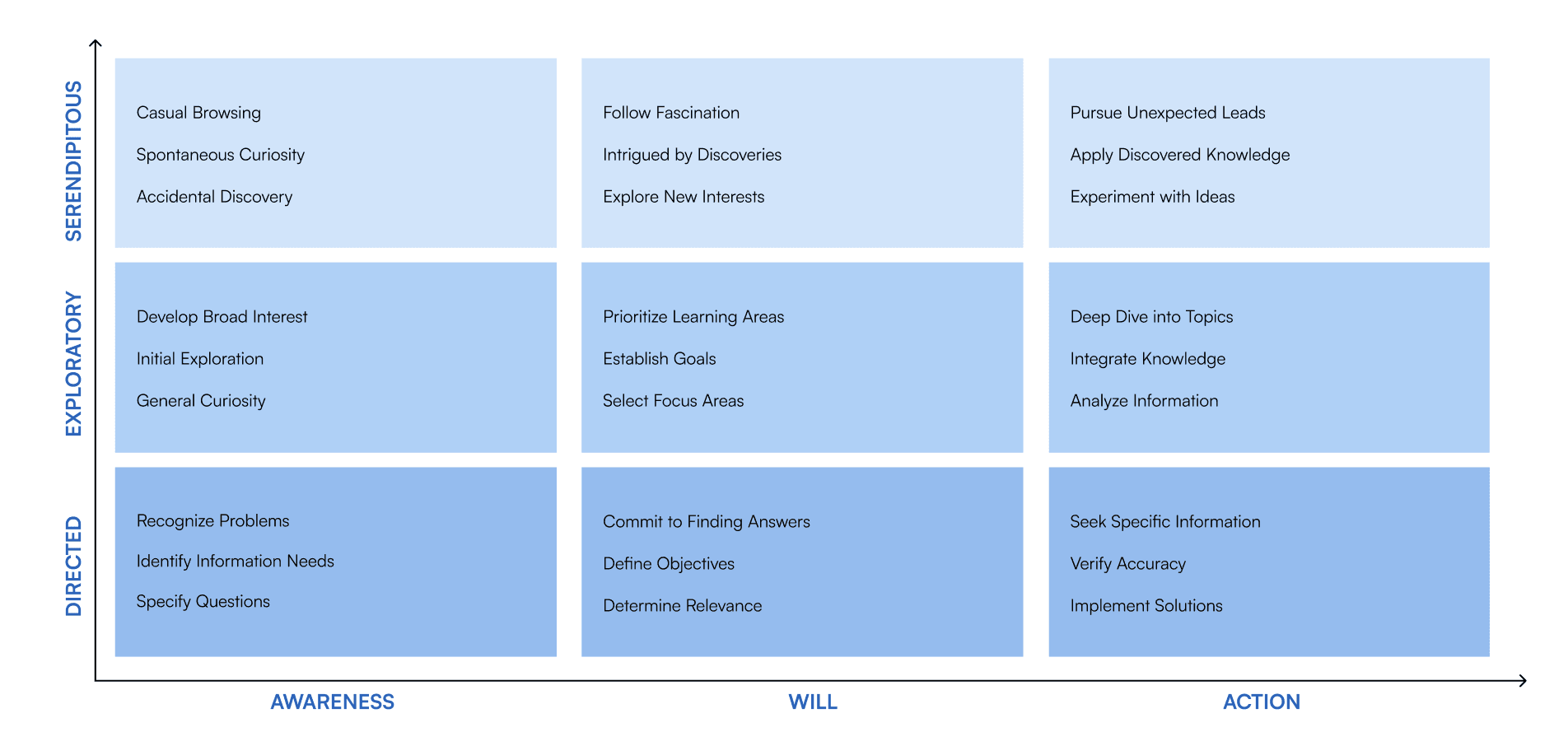
Analyzing building point of view through learning journey
Our research identified Wikipedia's breadth and depth of information as a unique asset for addressing these gaps. The platform's multifaceted content provides access to multiple perspectives, enabling users to explore topics comprehensively. This insight became the foundation for our design strategy: leveraging Wikipedia's existing strengths to help Gen Z develop well-rounded, educated points of view.
moving forward to design
Through comprehensive participatory research, we identified critical gaps in Gen Z's educational experience and validated a solution approach that leverages Wikipedia's unique strengths. Our research journey, from analyzing the Wikimedia Movement Strategy 2030 to conducting co-design workshops with diverse learners, revealed that Gen Z needs more than just information access. They need scaffolding to navigate complex topics, connect abstract concepts to personal relevance, and develop their own informed perspectives through exposure to multiple viewpoints.
design philosophy
Before moving into UI design, we established four guiding principles rooted in our research findings and co-creation sessions with Gen Z users. These principles would serve as our compass throughout the design process, ensuring every decision honored both user needs and Wikipedia's values.
